
Studio / Kapabilitas
Backend Engineering.
Backend adalah titik rawan tempat produk digital sering tumbang operasional akibat skema keliru, integrasi rapuh, atau kegagalan senyap. Kami merancang layanan backend engineering bagi founder dan korporasi Asia Tenggara agar tangguh menghadapi skala jutaan pengguna: topologi anti-gagal, platform data patuh UU PDP dan aturan BI, sistem pemantauan (observability) sejak awal, serta serah terima yang memastikan tim Anda tetap memegang kendali penuh.
Layanan backend engineering andal untuk segala kebutuhan produksi di Indonesia
Lingkungan operasional di Indonesia punya karakteristik yang unik. Alur pembayaran berjalan di bawah regulasi BI-FAST dan SNAP. Hak akses data diatur oleh UU PDP. Sektor-sektor tertentu wajib tunduk pada aturan OJK, BI, BPJPH, atau SATUSEHAT. Ditambah lagi, skalanya bisa melesat dari tahap uji coba menjadi 'jutaan transaksi per hari' hanya dalam satu kampanye pemasaran. Kami membangun backend yang siap menangani semua itu: topologi layanan dengan penanganan eror yang jelas, event pipeline dengan disiplin retry dan dead-letter, platform data dengan kontrol akses yang lolos audit, serta sistem pemantauan (observability) yang mendeteksi kendala sebelum pelanggan Anda menyadarinya.
Bagaimana kami membangun sistem backend engineering yang sesuai dengan tim anda
Empat tahap yang menjadikan sistem pemantauan, penanganan eror, dan serah terima dokumen sebagai aspek prioritas.
Discover
Memahami ranah bisnis dan profil beban sistem. Menentukan layanan prioritas serta mengidentifikasi tantangan utamanya, mulai dari lalu lintas data, kompleksitas integrasi, atau ketatnya regulasi. Kami juga memetakan kepatuhan hukum yang diperlukan serta mendeteksi titik rapuh pada sistem saat ini.
Design
Menetapkan topologi layanan, struktur data, alur event, dan sistem pemantauan secara matang sebelum masuk ke tahap pengodean. Kami mengantisipasi segala kegagalan jika sistem pihak ketiga mengalami kendala atau eror? Solusi seperti idempotensi, otomatisasi retry, dan penahanan eror diputuskan di ruang rapat desain, bukan saat sistem sudah beroperasi di lapangan.
Build
Para teknisi layanan backend engineering senior kami membangun sistem siap pakai dengan standar CI modern, metodologi pengujian berlapis, serta infrastruktur berbasis kode (IaC). Peluncuran dilakukan secara berkala menggunakan kendali fitur (feature flags) agar target stabilitas (SLO) dapat diukur secara presisi.
Scale
Alih kelola sistem kepada tim teknis dan SRE internal Anda. Kami membekali mereka dengan panduan operasional, prosedur darurat, templat mitigasi masalah, serta dasbor pemantauan efisiensi. Kendali penuh ada di tangan tim Anda, dengan jaminan dukungan dari kami untuk kebutuhan peningkatan sistem maupun konsultasi arsitektur jangka panjang.
Ragam kemampuan yang kami kembangkan
4 pilar utama yang menjaga sistem backend tetap stabil di lingkungan produk Indonesia.
Arsitektur & Topologi Layanan
Microservices, modular monolith, atau hibrida yang dipilih berbasis kebutuhan, bukan tren. Batasan sistem yang tegas, uji kontrak API, versi skema, serta mitigasi eror yang diputuskan sejak tahap awal blueprint.
Event Pipelines & Integrasi
Integrasi berbasis event sesuai kebutuhan. Kafka / NATS / SQS + SNS. Produsen idenpoten, retry otomatis, antrean dead-letter, serta putar ulang event: standar industri nyata, bukan perbaikan setalah ada kendala di lapangan.
Platform Data & Analitik Sadar Privasi
OLTP + OLAP + CDC. Proteksi data (masking) dan kontrol akses sesuai UU PDP. Pemodelan warehouse, lapisan semantik, serta tata kelola data yang valid. Fungsi ekspor data untuk audit regulasi sudah tertanam langsung.
Observabilitas, SLO & Tanggapan Insiden
Distributed tracing, log terstruktur, metrik dengan peringatan taktis, SLO dengan error budget, serta panduan kerja tim siaga (on-call). Fondasi operasional yang memastikan tim Anda mampu mengelola sistem secara mandiri.
Butuh tim backend, bukan sekadar pekerja proyek lepas?
Bagi klien yang mengoperasikan sistem produksi dalam skala besar, kami mengintegrasikan senior backend engineers, DevOps leadership, and SRE talent melalui layanan khusus kami, yaitu layanan backend engineering. Layanan ini juga mencakup penyediaan peran paruh waktu (fractional) seperti Head of Engineering dan Head of Platform. Sprout telah dipercaya untuk mengelola berbagai departemen teknik bagi beberapa klien dengan model ini, yang merupakan bagian dari solusi perluasan tim (augmented teams) kami.
Pelajari model augmented teams kami →Peran nyata layanan backend engineering kami
Sistem di balik produk digital yang dibangun untuk skala industri teregulasi, bukan sekadar demo fungsionalitas dasar.
Backend spatial ai untuk pengambilan keputusan infrastruktur secara real-time
Infrastruktur backend di balik platform Setara: pipeline data spasial, layanan kecerdasan keputusan, dan rekomendasi real-time untuk operasional infrastruktur telekomunikasi. Terpantau menyeluruh, patuh regulasi, dan siap menghadapi beban kerja skala operator seluler.
Tulang punggung digital untuk operasional logistik maritim
Backend operasional untuk logistik pelayaran maritim: pelacakan kargo, penjadwalan, alur dokumen, dan integrasi multipihak. Dirancang khusus untuk realitas operasional pelabuhan Indonesia serta penanganan data yang patuh regulasi.
Kepatuhan backend kini menjadi fondasi desain, bukan masalah setalah perilisan
UU PDP (berlaku efektif sejak Oktober 2024) menetapkan kekuatan hukum untuk kontrol akses, hak pemilik data, dan transfer data lintas batas pada setiap sistem yang mengelola data pribadi. Panduan OJK April 2025 memperketat kewajiban rekam jejak audit (audit trail) pada pengambilan keputusan berbasis AI. Sementara itu, aturan BI mengikat ketat alur pembayaran. Backend di Indonesia yang dirilis tanpa arsitektur kepatuhan ini secara otomatis akan menjadi temuan pelanggaran regulasi.
Tren terkini seputar layanan backend engineering di Indonesia
View all insights →
Transformasi Digital End to End: Menjembatani Kapabilitas Teknis dan Keahlian Industri
Pelajari bagaimana kapabilitas rekayasa produk komprehensif mendorong transformasi digital di sektor penerbangan, kesehatan, keuangan, hingga ritel.

Siklus Lengkap Pengembangan aProduk dari Strategi hingga Menjadi Sebuah Aplikasi Canggih
Jelajahi spektrum kapabilitas lengkap kami mulai dari strategi produk, desain, pengembangan mobile, web, hingga rekayasa backend untuk mengakselerasi visi digital Anda.
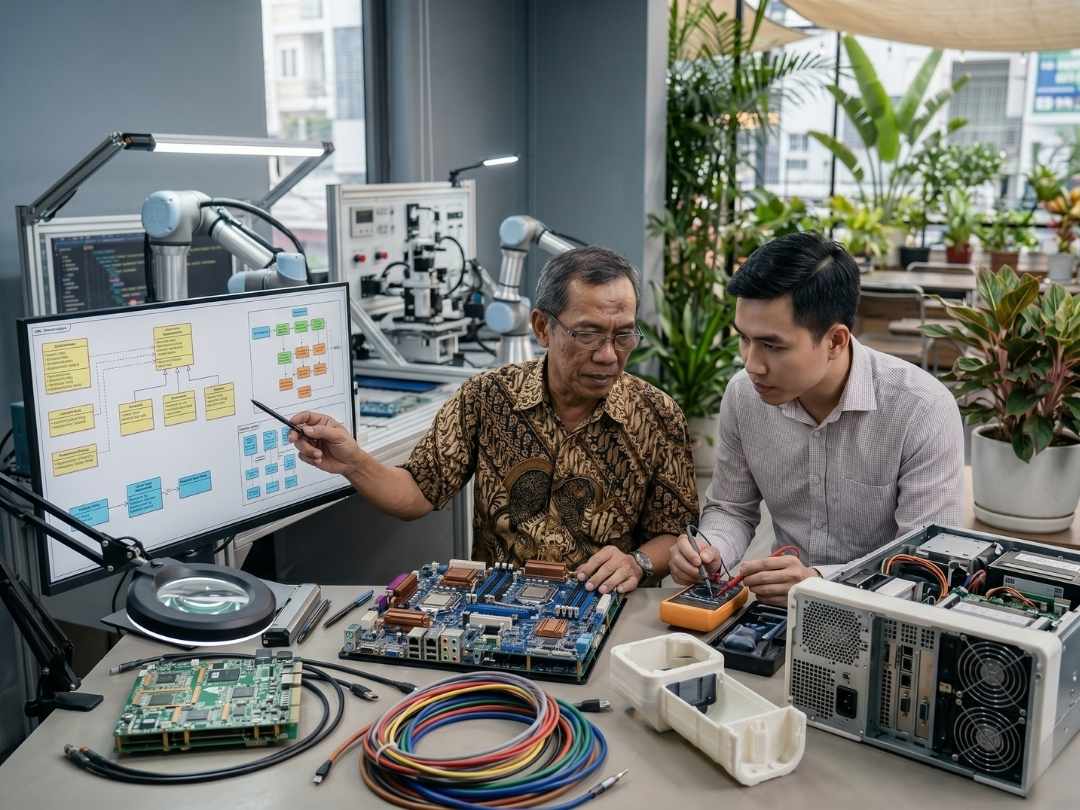
Rahasia Skalabilitas Produk Digital Melalui Rekayasa Backend yang Tangguh
Menyingkap peran krusial rekayasa backend yang solid dalam membangun produk digital yang aman, cepat, dan skalabel tanpa batas untuk pasar global.
Masalah backend apa yang paling mengganggu pikiran Anda?
Ceritakan masalah Anda, mulai dari sistem produksi yang baru, modernisasi sistem lama, kendala skalasi platform, atau pembenahan regulasi? Melalui solusi backend engineering kami, semua pemetaan kerja akan lebih tepat dan lengkap dengan disiplin pemantauan hingga serah terima. Kemungkinan terburuk, Anda mendapat penolakan dengan evaluasi dan catatan perbaikan. Kemungkinan terbaiknya, Anda akan menemukan mitra yang menjaga sistem backend yang penuh tanggung jawab, lengkap dengan OJK, BI, dan UU PDP sebagai fondasi.
Start a project