
Ventures / Portfolio & Thesis
Vertical AI Emerging Markets.
Horizontal AI infrastructure accrues to hyperscalers. Vertical AI accrues to operators who understand the domain. In Indonesia and Southeast Asia, that second category is where the ten-year builds are forming. It is where Sprout Ventures invests depth. Fintech AI. Agritech AI. Healthtech AI. Logistics AI. Regulated-sector AI for OJK-supervised banks and SATUSEHAT-integrated hospitals. We back operators who know their vertical and need the AI + product-engineering capability to compound with it.
The AI opportunities emerging markets are uniquely positioned to own
Two patterns are colliding in Indonesia and SEA in 2026. First, the hyperscalers, OpenAI, Anthropic, Google, Microsoft, are abstracting away AI capability. Any founder can access a frontier model in a weekend. Second, the domain operators with data, relationships, and regulator access, insurers with policyholders, banks with transaction histories, hospital groups with clinical records, cooperatives with farmer networks, have the distribution that converts AI capability into enterprise outcome. The vertical AI ventures that win emerging markets are the ones founded by operators who already hold that distribution. Our thesis backs them.
Verticals × AI maturity heatmap
A two-axis heatmap with verticals (Fintech, Healthtech, Agritech, Logistics, Proptech, Edtech, Media, Government) on one axis and AI-adoption maturity (Foundational, Emerging, Scaling, Compounding) on the other. Cells annotated with named SEA operators where public, and marked with where Sprout is engaging, where next, and where we pass: thesis discipline, not spray-and-pray. Coming soon.
How we pick vertical-AI opportunities
Four principles that separate our vertical-AI thesis from a generic AI portfolio strategy.
Domain-operator founders first
The winning vertical-AI founders in emerging markets are operators with domain depth, relationships, and distribution, not technologists with an AI demo. We prioritize founders who bring the vertical and need the AI + product-engineering capability, over the inverse.
Distribution > Model
In vertical AI, the model is table stakes. The distribution, regulator relationships, customer networks, supply-chain positions, is the moat. We invest where distribution already exists or has a clear path; we don't bet that model quality alone will earn market share.
Regulated-sector aware
In fintech, healthtech, and agritech (where halal + BPOM apply), vertical AI lives under regulator oversight. OJK, BI, UU PDP, BPJPH, SATUSEHAT, BSSN: the ventures that design for these compound. The ones that treat compliance as a post-launch retrofit stall at Series A.
Product-engineering-native
The verticals with the most durable moats (healthtech, fintech) require deep product engineering, not prompt libraries. We engage where our product + AI + regulatory engineering actually compounds. We pass where the venture is a wrapper around a frontier-model API and doesn't need us.
Where the thesis is concentrated
Four verticals where Sprout Ventures actively engages with founders or alliance portfolio companies.
Fintech AI
Credit decisioning, fraud, KYC/KYB, AML, transaction monitoring, wealth, insurance. OJK-regulated surface; BI payment rails; PPATK AML oversight. Sprout's strongest regulatory-AI engineering depth lives here.
Agritech AI
Smallholder agronomy, yield prediction, pest detection, supply-chain orchestration, commodity price intelligence. Sprout alliance depth includes smallholder agronomy platforms across the Wright Partners portfolio.
Healthtech AI
Clinical records, SATUSEHAT integration, clinical decision support, patient experience, telemedicine orchestration, health insurance claims. UU PDP + Ministry of Health EHR target context.
Logistics + Supply Chain AI
Maritime, last-mile, warehouse, cold chain, cross-border e-commerce fulfillment. Sprout's long-standing portfolio in logistics (TITIP and adjacent) informs the thesis.
Vertical AI thesis in action
Where the thesis is already showing up, in Sprout's portfolio and in the broader SEA operator landscape.
Vertical agritech AI: Tech4Good silver, 30–50% yield uplift
A Sprout-supported venture building AI-powered agronomy for Indonesian smallholders. Vision and extraction models turn photo submissions into field-specific guidance over WhatsApp in Bahasa and regional languages. Silver at the 2025 Salesforce Tech4Good Awards.
Fintech AI is the largest vertical-AI capital pool in SEA
SEA fintech raised $1.3B across 111 deals in recent reporting windows, the largest vertical-AI capital pool in the region. Named operators (Kredivo, Pluang, Xendit, and others) are building fintech platforms with AI at the core for credit, fraud, wealth, and payment rail products.
Agritech is the fastest-climbing share of SEA venture deals
Agritech's share of SEA venture deals climbed from 3.2% in 2019 to 9.5% in recent reporting, a near-3x move that reflects both AI's entry into the sector and the operator-led ventures (eFishery, Aruna, Dayatani, Jala.tech) that have validated the thesis.
What's trending in SEA vertical AI
View all insights →
WhatsApp Wired Business: Managing Operations as Smart as a Corporate Enterprise
Discover how Southeast Asian UMKMs can use Vertical AI embedded directly into chat apps to automate orders, manage logistics, and scale without expensive new tools.
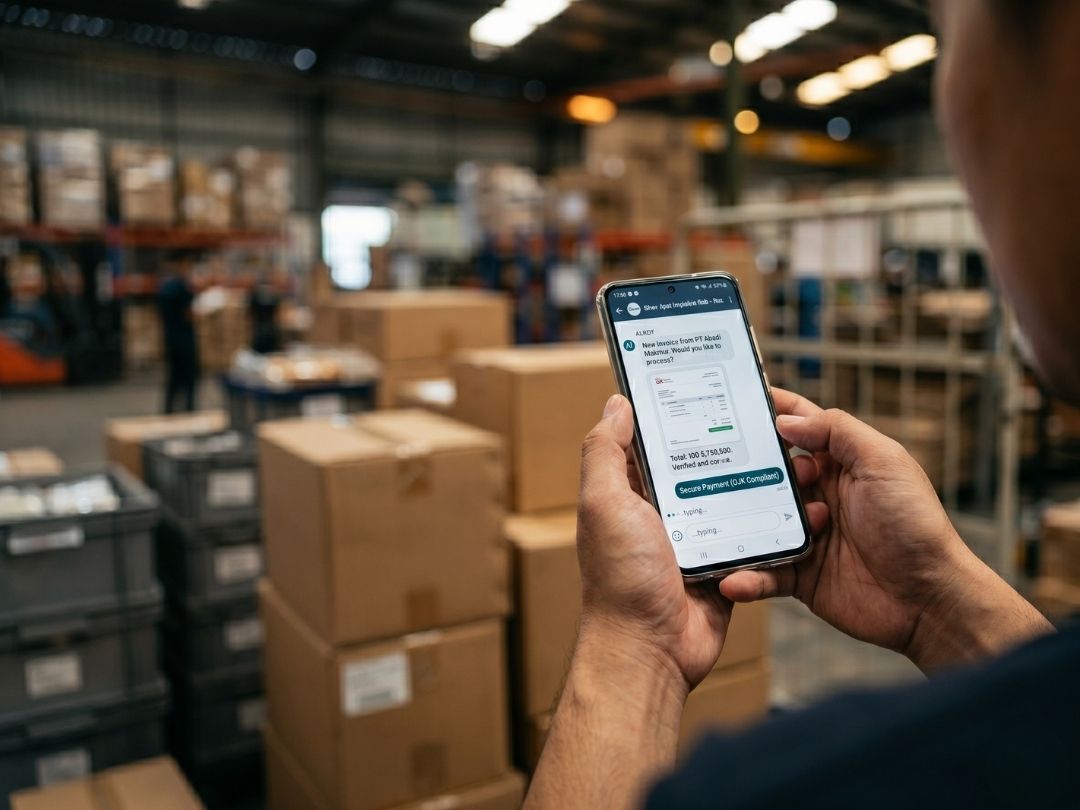
Building Fintech AI Without Hidden Commissions for the Southeast Asian Market
Explore how Sprout Ventures builds zero-commission, operator-respectful Fintech AI for UMKMs. Discover our thesis through our active, Monday morning portfolio.

Vertical AI Emerging Markets: From Engineer Tournaments to Real Market Solutions
Discover how competitive engineering and hackathons bridge the gap between theoretical software and real market solutions for Southeast Asian UMKMs
Building vertical AI for an Indonesian or SEA operator market?
Tell us the vertical, and more importantly, the operator relationship you already hold. Domain data, regulator relationship, customer network, supply-chain position. We look for the distribution first, the AI thesis second. If the fit is there, we'll scope co-build, technical-cofounder, or alliance engagement. Worst case, an honest no. Best case, a thesis-aligned venture gets the AI + product-engineering depth to convert distribution into a compounding operator.
Start a project